
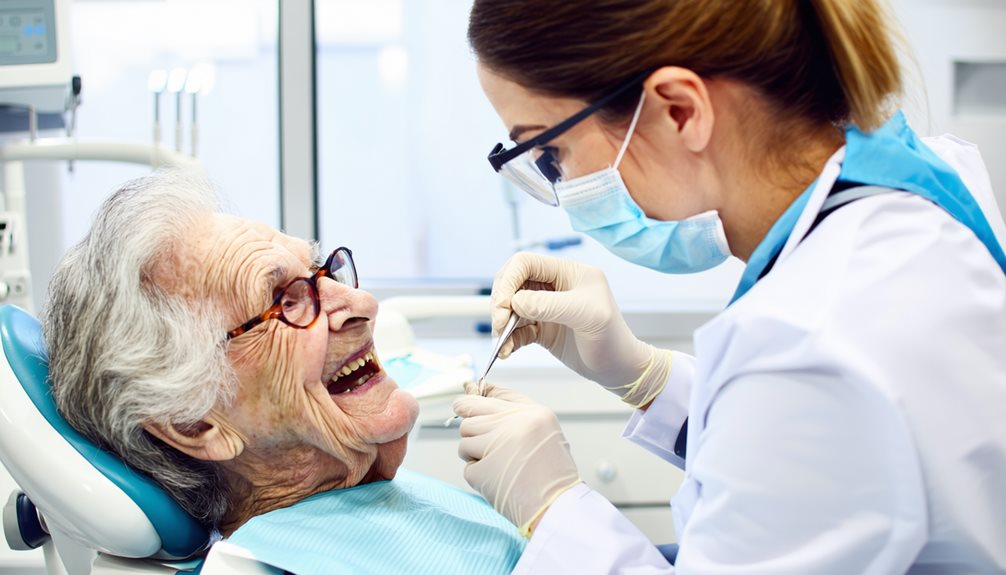
Periodontal care for seniors is paramount due to age-related health dynamics. Aging induces reduced salivary flow, diminished tissue regeneration, and altered immune responses, heightening vulnerability to periodontal diseases. These diseases are intricately linked to systemic conditions such as cardiovascular disease and diabetes via inflammatory mediators entering the bloodstream. Additionally, gum recession and tooth mobility are prevalent issues, necessitating specialized care strategies. Seniors face unique challenges, including xerostomia from increased medication use and barriers to accessing dental care. Evidence suggests that stringent oral hygiene and regular professional cleanings can greatly improve overall health outcomes. Exploring further will illuminate thorough care strategies.
Understanding Senior Oral Health
Understanding senior oral health requires acknowledging the intersection of aging-related biological changes and their impact on dental health. As individuals age, physiological modifications such as reduced salivary flow, diminished tissue regeneration, and altered immune responses considerably influence oral hygiene and gums health. These alterations can predispose the elderly to a plethora of dental complications, necessitating a proactive approach to periodontal care.
The integrity of gums is paramount, as it acts as a barrier against microbial invasion and systemic inflammation. In seniors, compromised gum health can lead to periodontal diseases, which are linked to systemic conditions like cardiovascular disease and diabetes.
Emphasizing meticulous oral hygiene regimens, including regular brushing with fluoride toothpaste, interdental cleaning, and professional dental assessments, is essential for maintaining periodontal stability and overall health.
Innovative technologies and treatment modalities are emerging to address these challenges. Digital dental imaging, laser therapies, and bioactive materials offer enhanced diagnostics and therapeutic outcomes.
Research underscores the importance of tailored oral care strategies that accommodate the unique needs of the elderly population, aiming to preserve functional dentition and enhance quality of life. Embracing these advancements can catalyze a paradigm shift in senior oral health management, fostering a future of improved periodontal well-being.
Common Periodontal Issues in Seniors
As seniors face the complexities of aging-related changes in oral health, it becomes imperative to identify the prevalent periodontal issues they encounter.
With advancing age, the structural and functional integrity of the periodontal apparatus can be compromised, often leading to conditions such as gum recession and tooth mobility. Age-related changes, coupled with potential systemic health challenges, necessitate a focused approach to maintaining periodontal health.
Common periodontal issues in seniors include:
-
Gum Recession: This condition involves the apical migration of the gingival tissue, exposing the root surfaces of teeth. It is often exacerbated by mechanical trauma, periodontal disease, or physiological aging, and can increase the susceptibility to root caries and dentinal hypersensitivity.
-
Tooth Mobility: Increased tooth mobility is a result of the progressive loss of periodontal ligament support, often due to chronic periodontitis. This condition can compromise masticatory efficiency and lead to eventual tooth loss if not addressed with appropriate periodontal interventions.
-
Chronic Periodontitis: Characterized by inflammation of the supporting structures of the teeth, chronic periodontitis is prevalent among seniors. It leads to the gradual destruction of periodontal ligament and alveolar bone, necessitating thorough periodontal therapy to preserve dental function.
Understanding these issues allows for the development of innovative, targeted interventions that can enhance oral health outcomes for the elderly population.
Impact of Periodontal Disease on Overall Health
Periodontal disease, often viewed as a localized oral health issue, has significant implications for systemic health, necessitating an extensive understanding of its broader impact. Evidence-based research underscores the oral systemic connection, revealing how periodontal pathogens can exacerbate systemic conditions. Inflammatory mediators from periodontal tissues can enter the bloodstream, contributing to systemic inflammation, a known risk factor for cardiovascular diseases.
Such systemic implications are particularly concerning for seniors, who may already be at an elevated risk for a multitude of chronic conditions. The prevalence of periodontal disease among the elderly can intensify complications in diabetes management.
This interconnection suggests that periodontal therapy could be an essential adjunctive treatment for enhancing metabolic control in diabetic patients.
Furthermore, periodontal disease has been linked to respiratory illnesses, including pneumonia, due to the aspiration of oral bacteria into the lower respiratory tract.Innovative strategies for managing periodontal health could consequently play a critical role in mitigating such risks. Recognizing the systemic implications of periodontal disease is essential for developing thorough healthcare models that integrate dental and medical care for seniors.
Prevention Strategies for Seniors
Ensuring ideal oral health in seniors requires a multifaceted approach to prevention, emphasizing both clinical interventions and patient education. The foundation of periodontal care rests on stringent oral hygiene practices tailored to the unique needs of the elderly population.
Evidence suggests that age-related changes in manual dexterity necessitate adaptive tools, such as electric toothbrushes and ergonomic floss holders, to maintain effective plaque control.
Nutritional considerations play a pivotal role in periodontal health, where deficiencies in micronutrients such as calcium and vitamin D have been correlated with increased susceptibility to periodontal disease. Consequently, a balanced diet rich in essential nutrients is indispensable for reinforcing periodontal structures.
Innovative strategies to enhance periodontal health in seniors include:
- Customized oral hygiene regimens: Tailored plans that account for cognitive and physical limitations.
- Regular professional cleanings: Biannual periodontal assessments and cleanings to monitor and prevent disease progression.
- Integration of salivary diagnostics****: Cutting-edge technology to detect biomarkers of periodontal disease early, enhancing preventive measures.
Incorporating these strategies into the standard geriatric care model can notably mitigate the risk of periodontal disease, ultimately improving overall health outcomes in senior populations.
The emphasis on prevention through education and technology promises to revolutionize periodontal care in the aging demographic.
Treatment Options for Senior Patients
Addressing periodontal health in senior patients extends beyond preventive measures to encompass effective treatment strategies tailored to this demographic’s unique physiological considerations.
Geriatric dentistry must adapt to age-related changes such as reduced salivary flow, altered immune response, and the presence of systemic conditions that complicate periodontal therapy. Scaling and root planing remain foundational interventions, yet their efficacy may be enhanced by adjunctive antimicrobial treatments. Localized delivery of antimicrobials like chlorhexidine chips or doxycycline gels can offer targeted bacterial reduction with minimal systemic impact.
Innovative regenerative procedures such as guided tissue regeneration and the application of growth factors like platelet-rich plasma are increasingly viable, promoting periodontal ligament repair and alveolar bone regeneration. These techniques, however, require careful patient selection and consideration of medical histories.
Patient education is pivotal, ensuring that seniors understand their treatment plans and the importance of maintaining oral hygiene post-therapy. This includes instruction on modified brushing techniques and the use of interdental cleaning devices.
Leveraging technology, such as tele-dentistry platforms, can facilitate continuous patient engagement and monitoring. As geriatric dentistry evolves, these evidence-based approaches are essential in optimizing periodontal health outcomes for the senior population.
Finding the Best Dental Care for Seniors
For senior patients, identifying exemplary dental care necessitates a thorough evaluation of both the dental practice and the specific needs of this age group. This demographic often faces unique challenges such as increased susceptibility to periodontal disease, dental prosthesis requirements, and systemic health considerations that impact oral health.
Consequently, it is imperative to find dental care that is not only cost-effective but also tailored to address these specific issues.
To aid in finding affordable care while guaranteeing specialized services are provided, consider the following:
-
Assessment of Dental Providers: Evaluate the credentials and experience of dental practitioners in geriatric dentistry, confirming their proficiency in handling complex cases common in seniors.
-
Range of Services Offered: Verify the availability of all-encompassing services, from periodontal therapy to restorative solutions, explicitly designed to cater to senior patients.
-
Accessibility and Affordability: Investigate insurance compatibility and payment plans that accommodate the financial constraints of seniors while maintaining high standards of care.
Innovative approaches in dentistry are constantly evolving, offering opportunities for enhanced care and improved outcomes.
Frequently Asked Questions
How Does Diet Influence Periodontal Health in Seniors?
Diet substantially impacts periodontal health in seniors by affecting nutrient absorption and oral hygiene. Insufficient nutrients compromise immune function, while poor oral hygiene exacerbates periodontal issues, necessitating dietary adjustments to enhance oral health outcomes in this demographic.
Are There Specific Dental Products Recommended for Seniors?
Specific dental products for seniors include electric toothbrushes and interdental brushes, enhancing dental hygiene effectiveness. Evidence-based oral rinses, such as those containing chlorhexidine, are recommended for reducing plaque and gingivitis, thereby promoting innovative periodontal care for aging populations.
Can Mental Health Affect Periodontal Health in Elderly Individuals?
Mental wellness greatly influences oral hygiene, particularly in elderly individuals. Psychological stress can exacerbate periodontal disease by impairing immune response, reducing saliva flow, and promoting neglect of oral care, underscoring the importance of integrated dental and mental health strategies.
What Role Does Genetics Play in Senior Periodontal Issues?
Genetic predisposition and hereditary factors markedly influence periodontal issues in seniors, affecting susceptibility to conditions like periodontitis. Understanding these genetic components is essential for developing innovative, personalized treatment plans and preventive strategies in periodontal care for the elderly.
How Does Tobacco Use Impact Senior Periodontal Health?
Tobacco use exacerbates periodontal disease in seniors, compromising oral hygiene and increasing inflammation. Evidence-based interventions highlight tobacco cessation as vital, reducing periodontal pathogens and enhancing treatment outcomes, consequently promoting innovative approaches to optimize geriatric oral health management.
Conclusion
Prioritizing periodontal care for seniors is imperative due to the prevalence of periodontal issues and their significant impact on systemic health. Effective prevention strategies and appropriate treatment options can mitigate these risks, enhancing overall health outcomes. Evidence underscores the necessity of specialized dental care tailored to the unique needs of the elderly population. Consequently, integrating thorough periodontal care into senior healthcare protocols is essential for maintaining both oral and systemic health, thereby improving quality of life for this demographic.

