
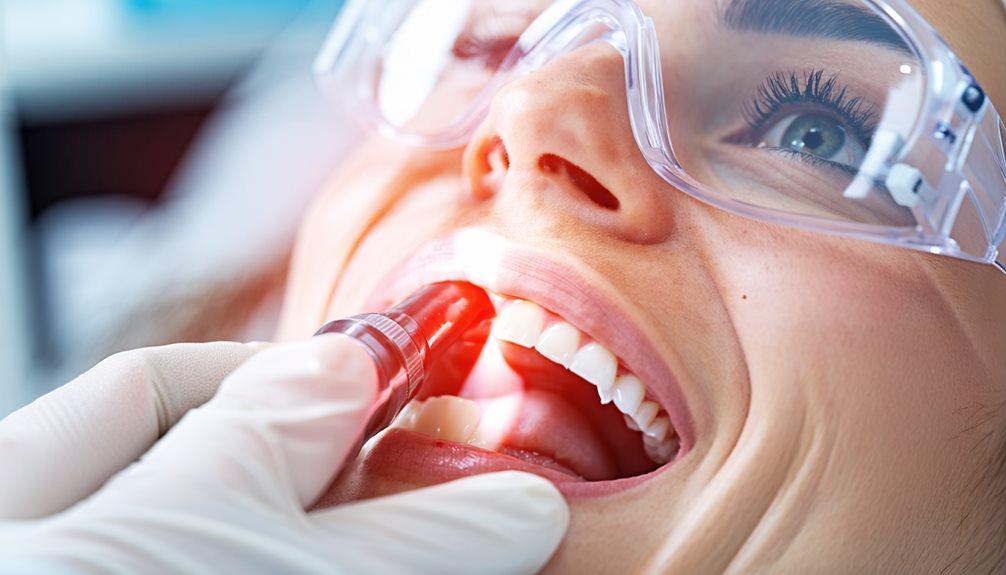
Innovative techniques in treating severe periodontal disease include laser-assisted periodontal therapy, guided tissue regeneration (GTR), and platelet-rich plasma (PRP) applications. Laser therapy offers precision and reduced invasiveness, enhancing patient comfort and promoting tissue regeneration. GTR employs biocompatible membranes to facilitate the natural regrowth of periodontal structures. PRP use concentrates growth factors to improve tissue healing and bone regeneration. Minimally invasive surgeries like MIST enhance recovery and treatment precision, while advanced antimicrobial strategies target specific pathogens, reducing disease morbidity. These advancements align with precision medicine approaches, promising improved, customized treatment pathways. Explore how these methodologies integrate into modern periodontal care.
Laser-Assisted Periodontal Therapy
The advent of laser-assisted periodontal therapy represents a notable advancement in the management of periodontal disease. This innovative technique utilizes focused light energy to target diseased periodontal tissues with precision, offering a less invasive alternative to traditional surgical methods.
The integration of lasers in periodontal treatment is underscored by the critical importance of laser safety, ensuring that the procedure is both effective and devoid of adverse effects. Clinicians are advised to adhere to stringent safety protocols, including appropriate wavelength selection and controlled energy settings, to optimize treatment outcomes while safeguarding patient health.
Evidence-based studies have demonstrated that laser-assisted therapy can greatly enhance treatment outcomes by reducing the bacterial load, promoting tissue regeneration, and minimizing postoperative discomfort. This approach is particularly advantageous in treating deep periodontal pockets and areas with complex anatomical challenges.
Additionally, the bactericidal effects of laser energy contribute to a reduced need for systemic antibiotics, aligning with contemporary goals of antimicrobial stewardship.
From a clinical perspective, the ability to provide precise, tissue-preserving treatment enhances patient compliance and satisfaction. As the demand for minimally invasive procedures rises, laser-assisted periodontal therapy stands as a promising frontier in periodontal care, reflecting a commitment to cutting-edge, patient-centered innovations.
Guided Tissue Regeneration
Among the myriad of advanced techniques in periodontal therapy, guided tissue regeneration (GTR) stands out as a fundamental method aimed at restoring periodontal support structures lost to disease. This innovative approach leverages principles of tissue engineering to facilitate the regrowth of bone, periodontal ligament, and connective tissue, which are often compromised in severe periodontal disease.
GTR employs cellular scaffolds, which are biocompatible membranes that act as barriers. These scaffolds prevent the rapid proliferation of epithelial cells into the periodontal defect, thereby allowing slower-growing cells, such as osteoblasts and fibroblasts, to repopulate the area.
Clinical studies have substantiated the efficacy of GTR in enhancing periodontal regeneration. By utilizing cellular scaffolds, the technique guarantees selective cell repopulation, often complemented by bone grafts or bioactive molecules to stimulate tissue formation. The strategic application of these scaffolds is vital in achieving ideal outcomes, as it mimics the natural composition and architecture of the periodontal tissues.
From a clinical perspective, GTR represents a significant advancement in periodontal therapy, offering a regenerative solution that aligns with the body’s intrinsic healing processes. This technique holds promise for future innovations in periodontal management, providing a framework for the development of next-generation regenerative therapies.
Platelet-Rich Plasma Applications
Recent advancements in periodontal therapy have positioned platelet-rich plasma (PRP) as a pivotal adjunctive treatment in promoting periodontal regeneration. The mechanism by which PRP exerts its regenerative effects is primarily through the concentrated delivery of growth factors such as platelet-derived growth factor (PDGF) and transforming growth factor-beta (TGF-β), which enhance tissue repair and cell proliferation.
The process of platelet isolation is critical, involving centrifugation of the patient’s blood to achieve a high concentration of platelets, thereby optimizing the therapeutic potential.
In clinical applications, PRP is often utilized in conjunction with bone grafts or other regenerative materials to enhance the healing of periodontal defects. Studies have demonstrated that PRP can markedly improve soft tissue healing and bone regeneration, reducing pocket depths and fostering attachment gain.
Its therapeutic applications extend to various periodontal conditions, including infrabony defects, furcation involvements, and gingival recession.
Furthermore, PRP’s autologous nature minimizes the risk of adverse reactions, making it a safe and innovative modality. As research continues, the refinement of platelet isolation techniques and the exploration of synergistic effects with other regenerative therapies hold promise for expanding PRP’s role in periodontal therapy.
Minimally Invasive Surgery
As advancements in regenerative therapies such as platelet-rich plasma enhance periodontal treatment outcomes, the focus now shifts to minimally invasive surgical techniques that further optimize patient care.
These techniques, characterized by surgical precision and reduced trauma to the surrounding tissues, have emerged as a cornerstone in modern periodontal therapy. Minimally invasive surgery (MIS) not only mitigates the risk of postoperative complications but also considerably accelerates patient recovery, thereby enhancing overall treatment efficacy.
Evidence supports the efficacy of MIS in achieving substantial clinical improvements in periodontal disease management. Techniques such as the minimally invasive surgical technique (MIST) and the modified minimally invasive surgical technique (M-MIST) have demonstrated superior outcomes regarding periodontal regeneration, probing depth reduction, and clinical attachment level gain.
These approaches utilize magnification and microsurgical instruments to guarantee surgical precision, thereby preserving healthy tissue and minimizing patient discomfort.
Furthermore, MIS facilitates faster wound healing due to reduced surgical trauma and inflammation. As these techniques continue to evolve, they hold promise for integrating with regenerative materials and biologics, potentially advancing periodontal therapy to unprecedented levels.
Consequently, minimally invasive surgery represents a pivotal progression in the management of severe periodontal disease, aligning with patient-centric, innovative treatment paradigms.
Use of Antimicrobial Agents
The application of antimicrobial agents in periodontal therapy focuses on targeted bacterial reduction to mitigate the microbial etiology of periodontal disease.
Recent advancements emphasize sustained drug delivery systems, which guarantee prolonged therapeutic concentrations at the site of infection, thereby enhancing clinical outcomes.
These approaches are underpinned by evidence demonstrating their efficacy in reducing periodontal pocket depths and improving attachment levels.
Targeted Bacterial Reduction
Targeted bacterial reduction is a pivotal approach in the management of periodontal disease, focusing on the precise elimination of pathogenic microorganisms through the use of antimicrobial agents. This strategy is gaining traction due to its ability to specifically disrupt bacterial biofilms, complex structures that shield pathogens from host immune responses and conventional treatments.
By penetrating these protective biofilms, antimicrobial agents can effectively reduce the bacterial load, thereby mitigating the inflammatory response associated with periodontal disease.Clinically, the application of targeted antimicrobials aims to not only reduce the microbial burden but also facilitate immune modulation.
Evidence-based studies suggest that agents such as chlorhexidine, doxycycline, and metronidazole exhibit significant efficacy in biofilm disruption and reduction of periodontal pocket depths, thereby improving clinical attachment levels.
Innovations in this domain are driven by the need for precision medicine, where the therapeutic protocols are tailored based on the microbial composition of the biofilm and the patient’s specific immune response. Such targeted interventions promise to revolutionize periodontal therapy, offering more predictable and sustainable outcomes in the fight against severe periodontal disease.
Sustained Drug Delivery
Sustained drug delivery systems represent a significant advancement in the administration of antimicrobial agents for periodontal disease management. These systems are designed to maintain therapeutic drug concentrations at the site of infection over extended periods, thereby optimizing clinical outcomes.
Traditional methods often involve systemic administration, which can lead to suboptimal drug concentrations at the periodontal site and potential systemic side effects. In contrast, sustained release drug formulations, such as biodegradable microspheres, gels, and films, are directly applied to periodontal pockets, ensuring localized and prolonged antimicrobial activity.
Evidence supports the efficacy of these formulations in reducing periodontal pathogens and promoting gingival health. Studies have demonstrated that sustained release systems, such as doxycycline and minocycline-loaded microspheres, result in significant improvement in clinical parameters, including pocket depth reduction and attachment level gain.
This localized approach minimizes the risk of systemic toxicity and resistance development, a significant concern with conventional systemic antibiotics.
Clinicians adopting these innovative formulations must consider factors such as drug concentration, release kinetics, and biocompatibility to tailor therapy to individual patient needs.
As periodontal therapy continues to evolve, sustained drug delivery offers a promising avenue for enhancing therapeutic efficacy and patient outcomes.
Advanced Bone Grafting Techniques
The integration of advanced bone grafting techniques in periodontal therapy has demonstrated significant improvements in alveolar bone regeneration.
Autogenous bone harvesting, despite its inherent donor site morbidity, remains the gold standard due to its osteogenic potential.
However, the advent of synthetic graft materials and the incorporation of growth factors have expanded the therapeutic arsenal, offering promising alternatives with reduced morbidity and enhanced regenerative outcomes.
Autogenous Bone Harvesting
Although autogenous bone harvesting is a well-established procedure in periodontal therapy, recent advancements have markedly enhanced its efficacy and application. A critical component of successful bone grafting is the selection of an ideal bone source. Clinicians often consider intraoral sites such as the mandibular symphysis or ramus, which provide cortical bone with high osteogenic potential.
Extraoral sources, though less commonly used due to increased morbidity, include the iliac crest, offering abundant cancellous bone rich in osteoprogenitor cells. The choice of source is influenced by the defect size, accessibility, and patient-specific anatomical factors, which are essential in achieving favorable regenerative outcomes.
Innovative harvesting techniques have also emerged, reducing patient discomfort and enhancing graft viability. The use of minimally invasive surgical approaches, such as piezosurgery, allows for precise bone cutting with minimal thermal and mechanical trauma, preserving cell health.
Additionally, advancements in instrumentation and imaging, including CBCT-guided planning, facilitate accurate harvesting and placement, ensuring ideal defect coverage and integration. By refining these techniques, clinicians can maximize the regenerative potential of autogenous bone grafts, offering a promising avenue for the effective treatment of severe periodontal defects.
This aligns with the continuous quest for innovation in periodontal regenerative strategies.
Synthetic Graft Materials
While autogenous bone harvesting remains a cornerstone of periodontal regeneration, synthetic graft materials have gained prominence as a viable alternative, particularly in cases where donor site morbidity is a concern.
These grafts, engineered from bioactive materials such as hydroxyapatite and beta-tricalcium phosphate, offer predictable outcomes in the regeneration of osseous defects. The biocompatibility of these synthetic grafts is critical, as it influences the integration and stability of the graft within the host tissue.
Studies have demonstrated that these materials not only support osteoconduction but also promote cellular proliferation and differentiation, essential for successful periodontal regeneration.
The advantages of synthetic graft materials are manifest in several key areas:
- Material Biocompatibility: Guarantees integration with minimal inflammatory response, promoting quicker healing.
- Predictable Resorption Rates: Tailored to match natural bone turnover, reducing the risk of graft failure.
- Scalability and Consistency: Synthetic production allows for controlled quality and availability, overcoming limitations of autogenous sources.
From a clinical perspective, adopting synthetic grafts represents a paradigm shift in managing severe periodontal disease.
Their application promises to reduce patient morbidity, enhance clinical outcomes, and broaden treatment feasibility, thereby aligning with the aspirations of contemporary periodontology.
Growth Factor Integration
Integrating growth factors into advanced bone grafting techniques revolutionizes periodontal regeneration by enhancing biological processes at the cellular level. This approach harnesses the potential of biomolecular applications to stimulate osteoblastic activity, promoting new bone formation and periodontal attachment. Growth factor sources such as platelet-derived growth factor (PDGF), bone morphogenetic proteins (BMPs), and transforming growth factor-beta (TGF-β) play essential roles in this regenerative paradigm.
These biomolecules accelerate cellular proliferation, differentiation, and matrix synthesis, vital for effective periodontal rehabilitation.
Clinical evidence supports the efficacy of growth factor integration in advanced bone grafting. Studies demonstrate that the application of growth factors in conjunction with bone graft materials greatly improves clinical outcomes, including increased bone density and enhanced periodontal attachment levels.
By optimizing the local microenvironment, growth factors facilitate the recruitment and activation of progenitor cells, effectively bridging the gap between bone graft materials and host tissues.
Innovative delivery systems, such as scaffolds and carriers, are being developed to guarantee sustained release and targeted delivery of growth factors, maximizing therapeutic effects.
This progressive approach not only addresses the limitations of traditional grafting techniques but also opens new avenues for personalized periodontal treatments, ultimately advancing the field of regenerative dentistry.
Frequently Asked Questions
Are There Any Natural Remedies Effective for Severe Periodontal Disease?
While evidence supporting natural remedies for severe periodontal disease is limited, some studies suggest herbal extracts and oil pulling may provide adjunctive benefits. However, they should complement, not replace, conventional clinical therapies for ideal periodontal health outcomes.
How Does Diet Impact the Progression of Periodontal Disease?
Dietary interventions markedly influence periodontal disease progression by addressing nutrient deficiencies. Evidence suggests that adequate intake of vitamins C and D, antioxidants, and omega-3 fatty acids can mitigate inflammation and promote periodontal health from a clinical perspective.
What Are the Potential Side Effects of Periodontal Treatments?
Periodontal treatments may induce side effects such as gum sensitivity, swelling, or discomfort. A thorough side effects overview is essential for patients considering treatment alternatives, ensuring informed decisions and optimizing therapeutic outcomes through innovative clinical interventions.
Can Stress Contribute to the Worsening of Periodontal Disease?
Stress can exacerbate periodontal disease by impairing immune function. Effective stress management and maintaining emotional wellbeing are essential in mitigating this risk, underscoring the importance of holistic patient care strategies within periodontal treatment protocols.
How Does Smoking Affect the Success of Periodontal Disease Treatments?
Smoking adversely impacts periodontal treatment outcomes by impeding tissue healing and exacerbating inflammation. Nicotine effects hinder vascularization and immune response, reducing treatment efficacy. Smoking cessation is essential for optimizing therapeutic results and advancing innovative periodontal interventions.
Conclusion
In conclusion, the integration of laser-assisted periodontal therapy, guided tissue regeneration, and platelet-rich plasma applications has greatly advanced the management of severe periodontal disease. Minimally invasive surgical techniques, along with the strategic use of antimicrobial agents, enhance clinical outcomes by reducing tissue trauma and infection risk. Additionally, advanced bone grafting techniques contribute to periodontal regeneration and stability. Collectively, these innovations demonstrate substantial potential in improving patient prognosis and expanding therapeutic options in periodontal treatment.

